A rare win for applicants in EU funding
The ERC reversed most of its proposed 2027 resubmission restrictions after a coordinated response from more than 1,000 scientists, highlighting how EU funding systems are evolving under pressure.
“If you fail, wait longer before trying again.”
That was, in essence, the message behind the proposed ERC resubmission restrictions for 2027.
And the research community pushed back.
Over the past weeks, something unusual happened in EU funding:
- A major funding body introduced stricter access rules to manage overload
- More than 1,000 scientists responded rapidly and in coordination
- A policy reversal followed within days
The ERC had a real problem to solve.
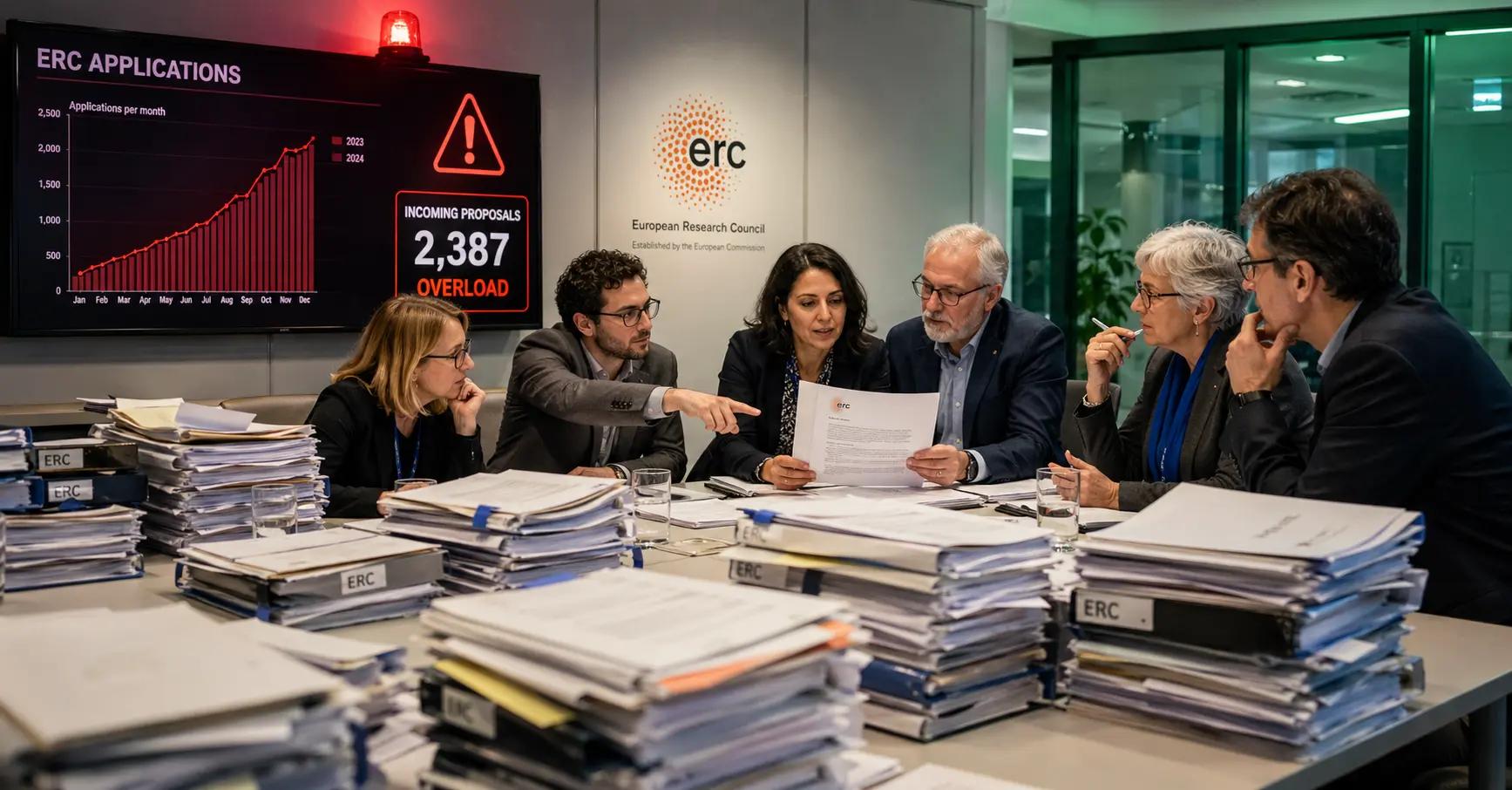
Applications are increasing sharply, reviewer capacity is under pressure, and some panels are now handling more than 250 proposals, compared to 50 to 150 in the past.
The system is being stretched.
The initial response was to limit who could reapply, effectively excluding many researchers for several years after a rejection.
From a system perspective, the logic was understandable.
From an applicant perspective, the signal was difficult.
The community challenged the solution, not the problem
What made this episode important was the nature of the response.
The research community did not simply reject the premise. It challenged the proposed mechanism.
A joint letter proposed alternatives focused on improving how applications are filtered and assessed, rather than restricting access for applicants.
The message was clear:
The problem is real.
But exclusion is not the right lever.
Suggestions included shorter Step 1 proposals, improved pre-screening, and better mechanisms to reduce pressure on evaluation panels.
This shifted the debate from opposition to problem-solving.
The result: most restrictions were walked back
The outcome was significant.
- The ERC walked back most of the proposed new restrictions for 2027
- Existing resubmission rules remain for Starting Grants, Consolidator Grants, and Advanced Grants
- The ERC committed to reviewing alternative solutions with the research community
This is a positive outcome.
Not because applicants “won”.
But because the system listened.
The community engaged constructively, and the conversation moved from reaction to collaboration.
Oversubscription is not going away
This episode should not be seen as an isolated ERC issue.
Across Horizon Europe, success rates are tightening and evaluation systems are under increasing pressure.
ERC, EIC, Eurostars, and other competitive funding instruments are facing the same structural challenge: demand is growing faster than available evaluation capacity.
We are entering a phase where not every strong proposal can be fully assessed in the way applicants expect.
This is already visible in other parts of the EU funding landscape, including the EIC Accelerator, where competition pressure and evaluation dynamics remain central concerns. We discussed this dynamic in when competition becomes statistical elimination.
Access to funding will evolve
The way access to EU funding is managed will continue to change.
This episode is likely just the beginning.
Applicants should expect:
- More structured pre-screening
- Greater emphasis on proposal readiness
- Possibly shorter early-stage submissions
- New mechanisms to reduce evaluator overload
For applicants, this means that timing, maturity, evidence, and strategic fit will become even more important.
A good proposal will not be enough.
It will need to be ready for a system that is becoming more selective earlier in the process.
This reinforces a broader point we have discussed before: evaluators assess what is written, not the effort behind it. See Ruthless Evaluator does not care how hard you worked.
A system under pressure, and still adapting
This situation highlights something fundamental.
EU funding is not only about writing better proposals.
It is also about how the system itself evolves under pressure.
When applicants and researchers engage constructively, they can influence that evolution.
That is not always the case.
But in this instance, the community response helped move the discussion toward a better solution.
Behind every call, template, and evaluation form, there is a system that is still adapting.
And, sometimes, listening.
#ERC #HorizonEurope #ResearchFunding #EUFunding #SciencePolicy #GrantWriting #InnovationFunding
Run an evaluator grade review on the draft
Upload a version, select programme context, and get structured feedback you can act on.