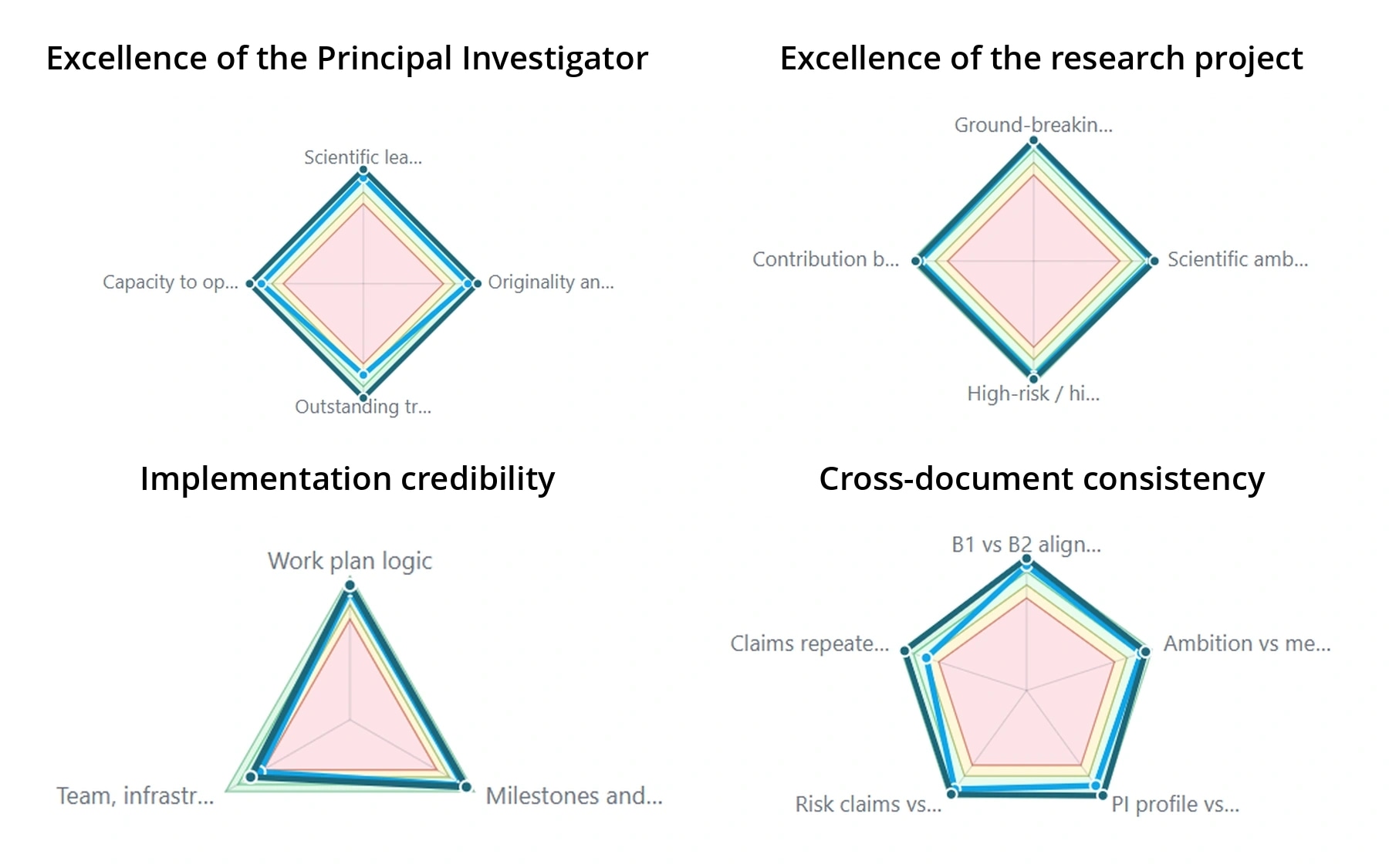
See recurring proposal quality patterns
Compare portfolio statistics, repeatable strengths, growth areas and quality trajectory across the researcher, team, programme cohort or selection you choose.
See what can cost points before an evaluator does.Ruthless stress-tests your EU funding proposal against the selected programme, official template and evaluation logic, then surfaces score-limiting weaknesses, readiness blockers and the revisions worth doing first.
Less reassurance. More signal.

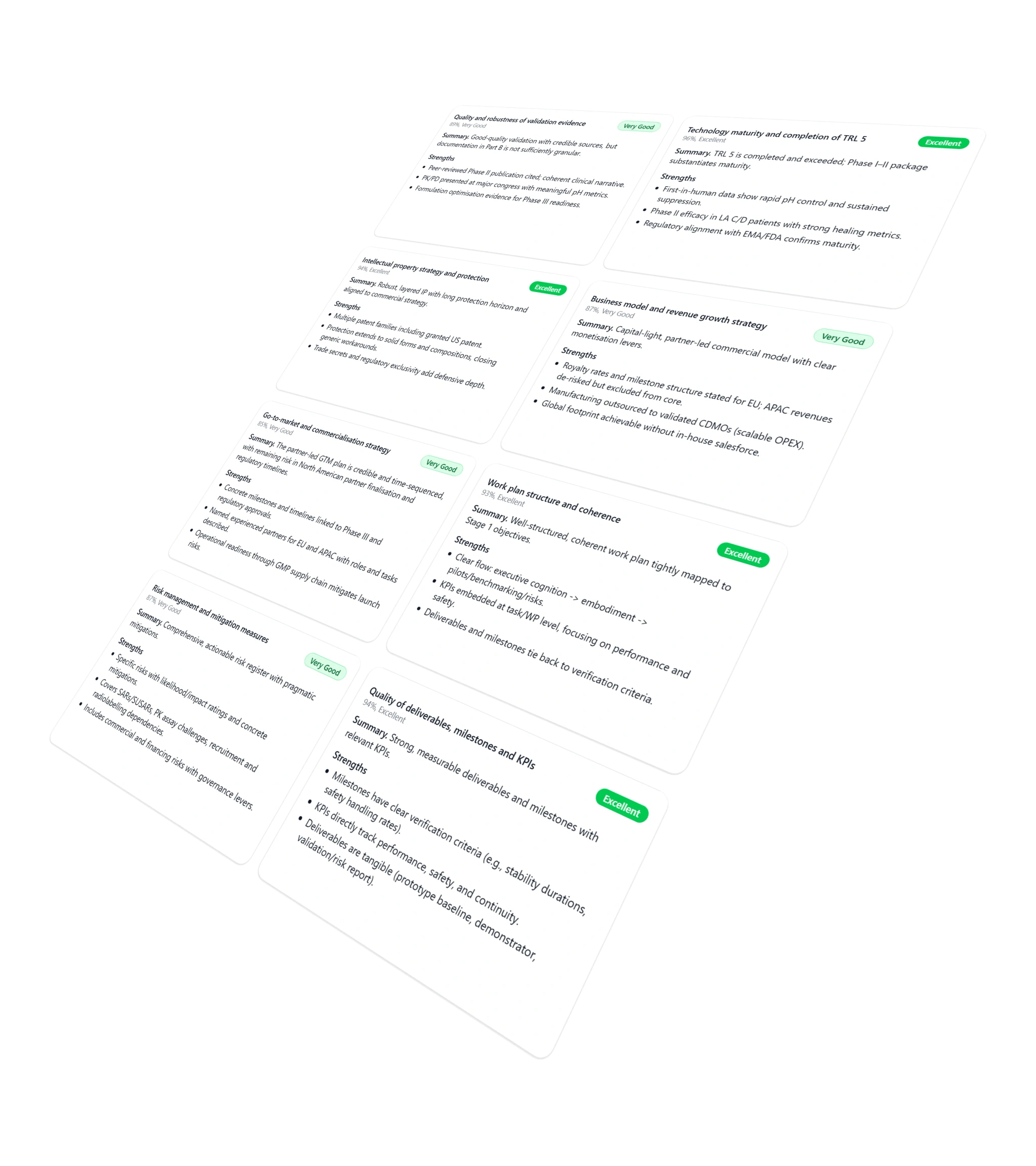
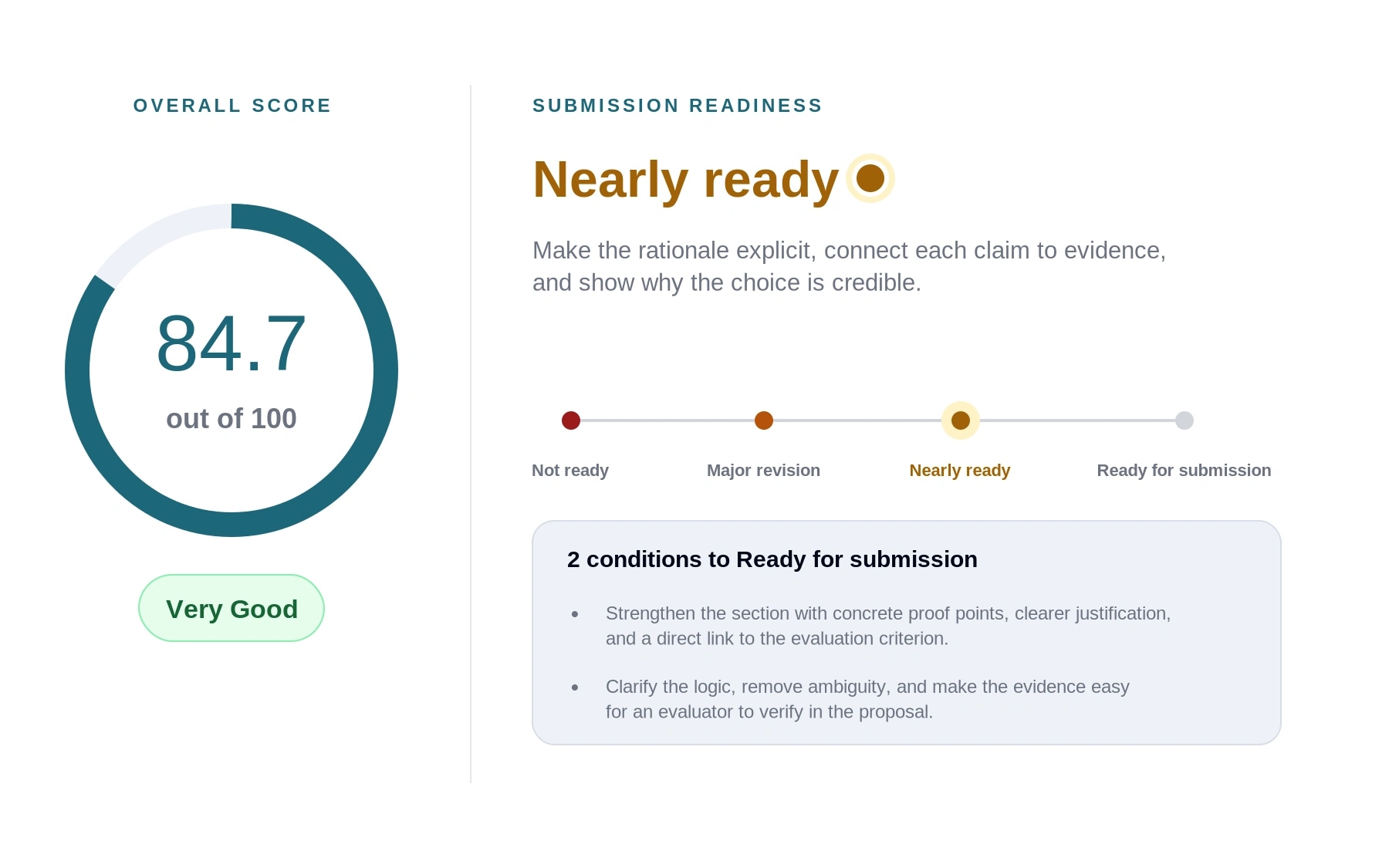
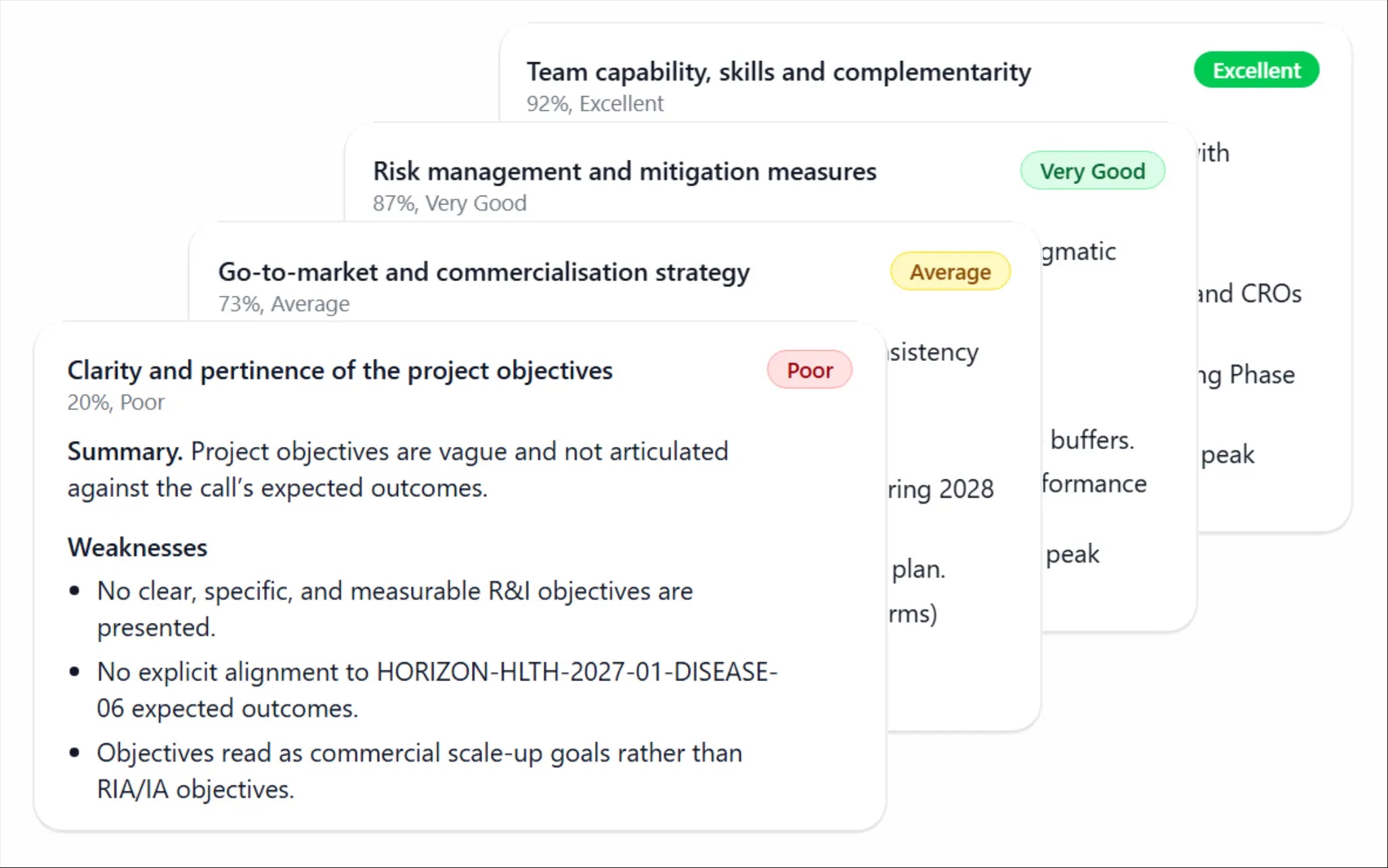
Criterion-level evaluation, readiness signals, ranked revisions and version comparison, all tied to the programme you are targeting.


Professional and Institutional plans turn evaluation history into portfolio analysis, recurring proposal quality patterns and focused development priorities.
Compare portfolio statistics, repeatable strengths, growth areas and quality trajectory across the researcher, team, programme cohort or selection you choose.
Use ranked development priorities and a focused roadmap to turn recurring evidence into practical learning actions for the next proposals.
Watch the real product flow from programme selection to a structured stress test, ranked revision priorities and version comparison.
AI-assisted, consultant-prepared or written in-house: use the people and tools that help you build the strongest draft, then add a separate quality-control layer before submission.
AI assistants and agentic workflows can accelerate drafting, but fluent output still needs codified programme logic, criterion coverage and evidence-based review across the final proposal.
AI assistants and agentic workflows canaccelerate drafting, but fluent output stillneeds codified programme logic, criterioncoverage and evidence-based review acrossthe final proposal.
External expertise can strengthen a proposal, but preparation can carry embedded assumptions. A separate final challenge tests the final proposal as the evaluator will actually read it against the criteria.
External expertise can strengthen a proposal,but preparation can carry embedded assumptions.A separate final challenge tests the finalproposal as the evaluator will actuallyread it against the criteria.
Deep project knowledge is a strength, but teams that do not work with EU funding every day can miss programme-specific nuances and evaluation expectations that materially affect the quality of the final proposal.
Deep project knowledge is a strength, butteams that do not work with EU funding everyday can miss programme-specific nuances andevaluation expectations that materially affectthe quality of the final proposal.
Stress-test the final draft against the applicable programme logic before submission.
Different drafting routes. The same applicable evaluation framework.
Ruthless does not replace the team, the consultant or the drafting tool. It helps identify contradictions, unsupported claims, alignment weaknesses and avoidable gaps before submission.
Horizon Europe, ERC, EIC, Eurostars and LIFE do not reward the same things. Ruthless applies the relevant structure, template and evaluation logic for the programme you select.

Different roles, same need: a disciplined stress test before the proposal leaves the team.
Add a structured review layer before sign-off, then use Intelligence to learn across researchers, teams or selected proposal cohorts.
Run a consistent stress test before final client review and focus senior time on the issues that can still move the case.
Pressure-test scientific ambition, evidence and execution logic without turning the process into another writing exercise.
Test innovation, market, implementation and financing logic before a funding panel tests it for you.
Ruthless combines Zero Data Retention AI processing with transient draft handling, controlled access and a security-gated development lifecycle.
Clear answers for teams preparing high-stakes EU funding proposals.
A calm surface. A ruthless evaluation underneath.

We use essential cookies to make the site work. Optional cookies, such as analytics, are disabled by default. You can accept, reject, or configure your preferences.
See: Privacy Policy